From scattered apps to one picture.
Tom had more health data than most people. He just couldn't use any of it. This is what it looks like when everything finally points in the same direction.
He had the data. He just couldn't use it.
Tom is 44. He's been dealing with elevated blood pressure for two years, some cardiac symptoms his cardiologist is watching, and a general sense that his stress level has been higher than it should be for longer than he'd like to admit. He's not ignoring his health. He's been trying to track it.
The problem isn't data. He has an Oura ring, a food logging app, an ongoing notes file, a blood pressure cuff, a reminder app he built himself, and two different shared documents with two different doctors. He has more data than most people who've ever seen a GP.
He just can't use it. None of it is in the same place. None of it talks to anything else. When his cardiologist asked him last fall how the last six months had gone, he opened three apps and still couldn't give a clear answer. He knew things hadn't been great. He couldn't say much more than that.
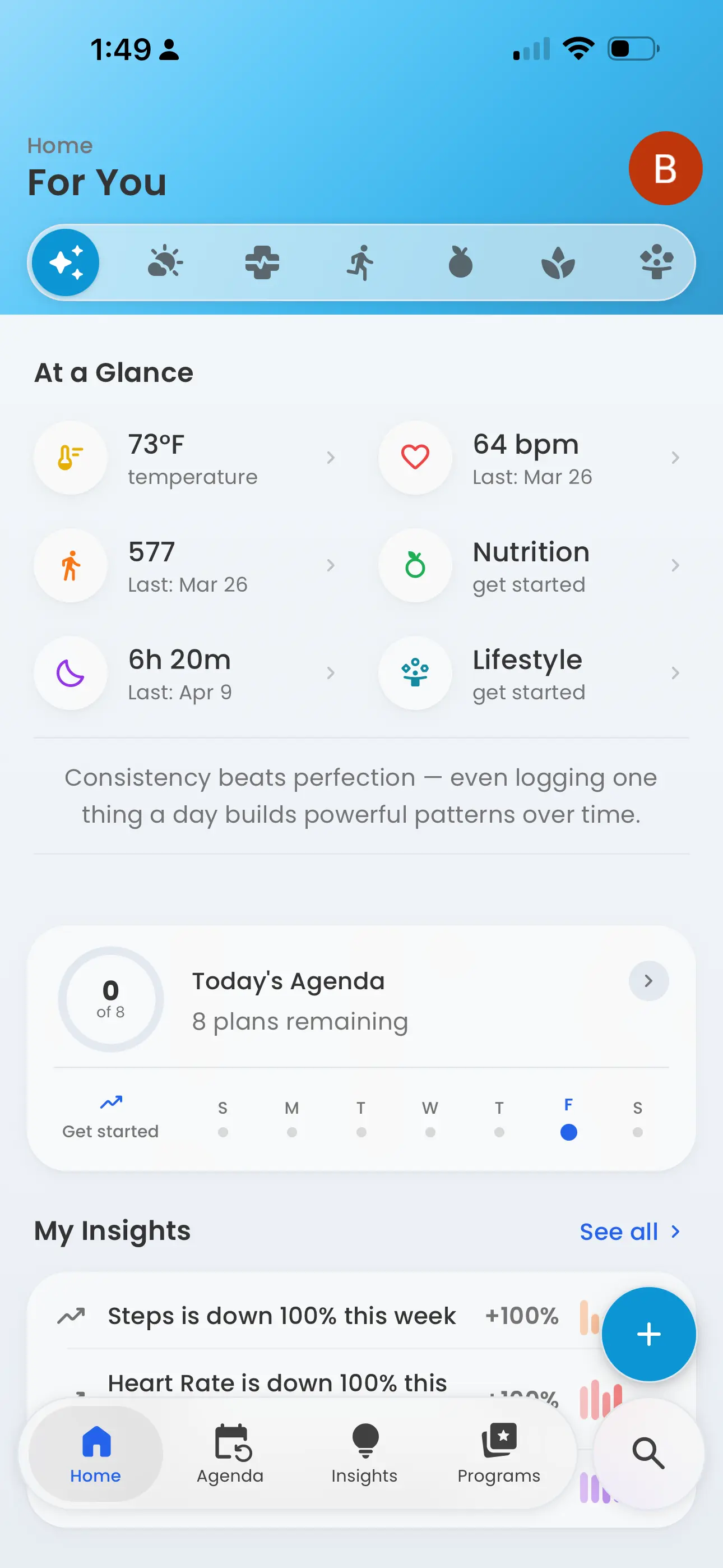
Four apps and a notebook, replaced by one view.
Your life doesn't happen in categories.
The Oura ring tracked his sleep. MyFitnessPal tracked what he ate. His notes app captured symptoms — when he remembered to open it. His blood pressure screenshots lived in a photos album where the dates were invisible once the image was cropped wrong.
The problem with separate apps for separate things is that your life doesn't work that way. The reason his blood pressure was high on a Tuesday might have been the poor sleep on Monday, the stressful call at 2pm, and the fact that he forgot to take his medication that morning. But to see that connection, he'd need to be looking at all four things at the same time, in the same view, for the same day. He never was.
He wasn't disorganized. He was fragmented. There's a difference. Fragmented means you have the pieces — you just can't see them together.
“Have things been getting better or worse over the last six months?” He had the data. He just couldn't assemble it.
He didn't need more data. He needed one place.
He set up Best Life over the course of about an hour. He connected his Oura ring so the sleep data came in automatically. He set up templates for blood pressure, symptoms, mood, and medication compliance — the things he wanted to track going forward. He didn't try to import two years of notes. That was the right call. Historical scattered data is hard to reconcile. What mattered was having one place from this point forward.
The first thing he noticed was how much easier it was to log when everything was in one app. He'd been context-switching between four different places every time he wanted to record something. Now there was one. The friction of logging dropped enough that he actually did it.
The second thing he noticed was how much richer each entry felt. A blood pressure reading logged in Best Life sat next to his sleep score from last night, his stress rating from earlier that day, and whether he'd taken his medication. It was the same reading. But it had context for the first time.
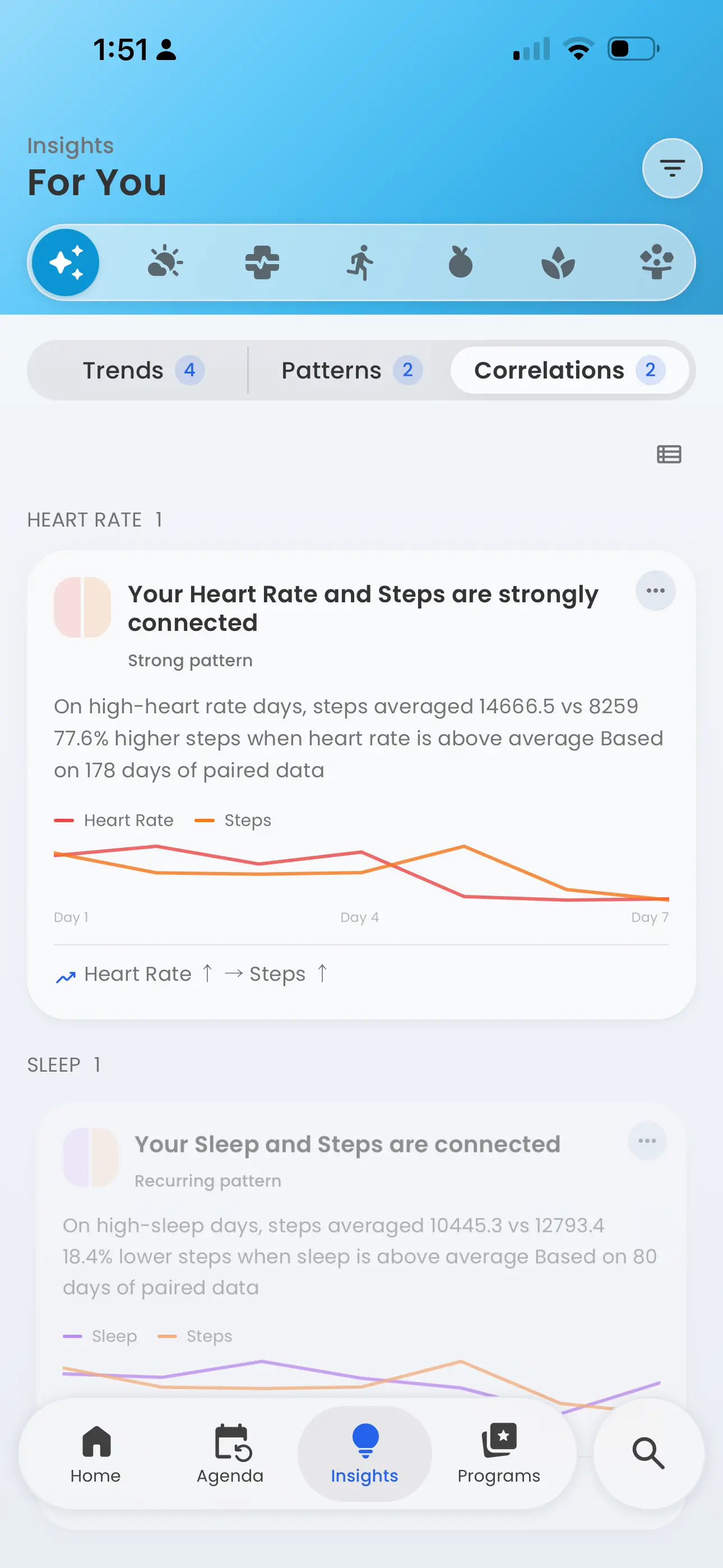
The correlations you could never see when the data lived in four different silos.
The picture isn't complete. But it's a picture.
After four weeks of consistent logging, he looked back at the month. His highest blood pressure readings were concentrated in the same two weeks where his sleep scores were lowest and his stress ratings were highest. He'd missed his medication three times — all on mornings after late nights. He had four symptom entries flagging chest tightness, and three of them were on days he'd had less than six hours of sleep.
None of this was conclusive. He knew that. But it was specific in a way that “I've been feeling pretty rough” wasn't. He brought a summary to his next cardiologist appointment. His doctor had questions he could actually answer.
He still has a notes app. He still checks his Oura app sometimes. Old habits take a while to dissolve. But Best Life is now the place where his health picture actually lives — not spread across six places where it can't be seen.
One picture. Everything in it is his.
Six separate sources. No shared view.
Not more data. A clearer picture.
Best Life didn't give Tom more information. It gave him one place to see what he already had.
Everything Oura tracked — sleep, HRV, resting heart rate — now sits in the same view as his symptoms, mood, and daily notes. He doesn't have to open a separate app to remember what his sleep was like the night before a bad day.
The blood pressure screenshots in his photos album were useless because he couldn't see them alongside anything else. In Best Life, they're logged entries with dates, next to whatever else was happening that week.
"Have things been getting better or worse over the last six months?" He can answer that now. Not perfectly — some of the historical data is still scattered — but for anything logged in Best Life, he has a real answer.
This isn't a story about optimization.
Tom didn't become a meticulous self-tracker. He still misses the occasional log. He still finds his Oura ring buried under a book some mornings. His old notes app still has two years of unstructured observations he hasn't fully migrated. None of that is a failure.
What changed is that he stopped feeling like his own health data was somewhere he'd never fully find. There's a particular exhaustion that comes from knowing you have information but not being able to access it in a useful form — from feeling like the answer is probably in there somewhere, in some app, in some screenshot you took four months ago.
He doesn't feel that anymore. His picture isn't complete. It never will be. But it's one picture — and he can look at it.