A week in Best Life.
Not a transformation. Not a system overhaul. Just seven days of paying attention — and what starts to show up when you do.
Amara has been feeling off for a few months. Not sick — nothing she could call a doctor about. Just lower energy than usual. Less sharp. A few more headaches than she'd expect. She's 38, works in operations, has two kids, and doesn't have time to be investigative about her own health. She mostly just notes it and moves on.
A friend mentioned Best Life. She downloaded it on a Sunday night, picked a template for energy and mood, set a reminder for 4pm, and told herself she'd try it for two weeks. This is the first.
The first entry is always the awkward one.
She opens the app at 4:12pm when the reminder fires. Energy: 3 out of 5. Mood: 3. Sleep last night: about six hours, quality was okay. No headache. Stress: medium-high, because Monday is always medium-high.
She hits save and puts her phone down. It took ninety seconds. She isn't sure what she expected to feel different — it's just data. One day of data means nothing yet. She knows that.
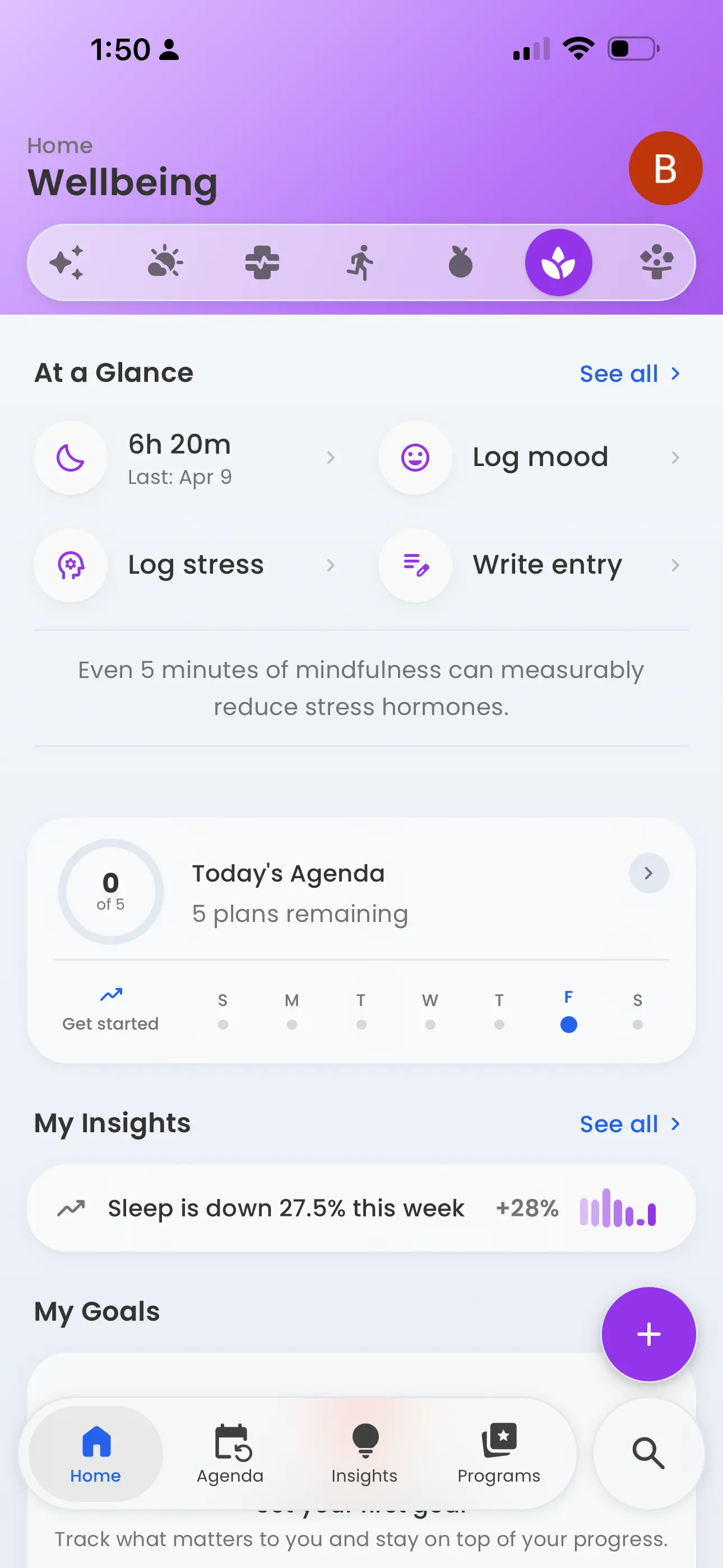
The 4pm reminder. Energy: 3. Mood: 3. This is what showing up looks like.
She forgets. That's fine.
Tuesday is a disaster — back-to-back meetings, a late call, dinner burned. The 4pm reminder fires and she dismisses it without thinking. She remembers at 10pm and decides not to backfill it. If she can't remember how she felt at 4pm, the entry would just be a guess.
Best Life doesn't mark Tuesday as a failure. It just doesn't have a Tuesday entry. The gap is part of the record.
Something worth noting.
She logs at 4:05. Energy: 4. Mood: 4. Sleep was good — nearly eight hours, she went to bed early because she was exhausted from Tuesday. No headache. Stress: low.
For a moment she just looks at the screen. Wednesday feels measurably better than Monday. She tries to figure out why. The sleep is the obvious variable. But she also had a real lunch today — she doesn't always — and the afternoon was quieter than usual. She adds a note: actual lunch, quieter afternoon.She's not drawing any conclusions yet. But it's the first time this week she's paid attention to the conditions of a good day, not just a bad one.
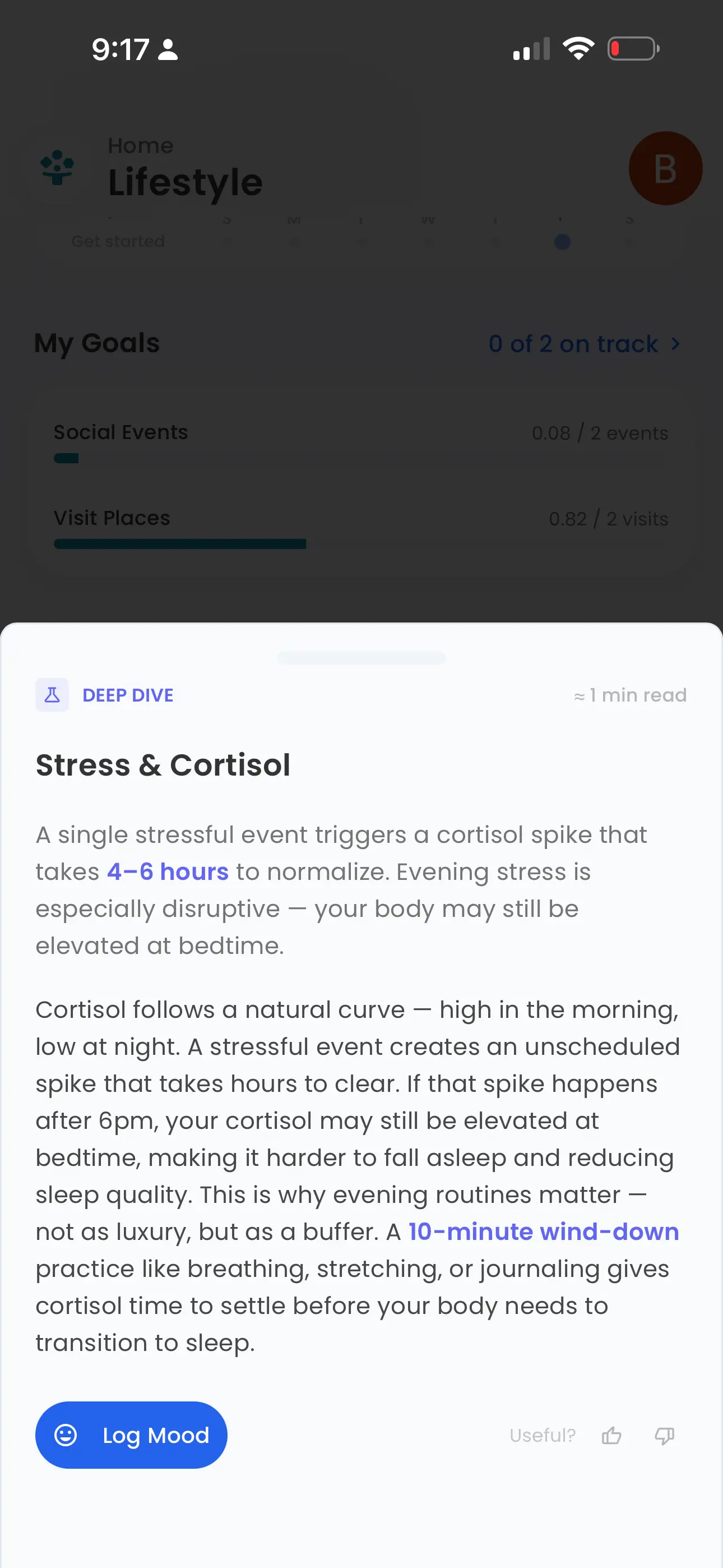
Not a tip. A reason.
The 2pm crash, logged.
She logs early today — at 2:30, right in the middle of feeling terrible. Energy: 1. Mild headache starting behind her left eye. Stress: high. Mood: 3. She adds a note: skipped lunch, back-to-back all morning, didn't drink much water.
She logs a second entry at bedtime to close out the day. By then the headache had faded and the worst of it had passed, but she wanted the record to show that the crash happened mid-afternoon, not at the end.
Looking at Wednesday and Thursday side by side, the difference is visible in a way she couldn't quite articulate before: Wednesday she ate, drank water, and had space. Thursday she did none of that. She still doesn't know which one caused the crash — maybe all three, maybe something else — but she has the entries to compare now.
Good morning, rough afternoon. Both worth logging.
Friday she logs twice again — morning and afternoon feel different, and she wants that in the record. Morning is a 4. Afternoon is a 2. She had lunch but ate it at her desk during a call, which she notes doesn't really count as a break. Sleep was poor — she stayed up too late.
She notices she's starting to use the notes field more. Not to explain things — she doesn't know what explains things yet — but to capture what was different about today. The act of writing it down is making her more observant than usual.
She logs Sunday. Forgets Saturday.
Saturday is a family day. The reminder fires at 4pm and she sees it while at a birthday party and swipes it away. She genuinely doesn't log it and doesn't feel bad about that. Sunday evening she logs before bed — energy was good for most of the weekend, sleep was better than during the week, mood was higher.
She notices this and writes: both days without work feel lighter. Probably obvious. But still.
Five entries. One hypothesis. That's enough.
She logged five of seven days. She missed Tuesday entirely and didn't backfill Saturday. Out of the five days she did log, every time she rated her energy at 3 or below, she'd either skipped lunch, slept under six hours, or both.
That's five entries. It's not a pattern — not yet. It's a hypothesis. But it's more than she had at the start of the week, when she just had a vague sense of feeling worse lately without any idea what to point to.
She doesn't change anything yet. She keeps logging. That's the whole plan.
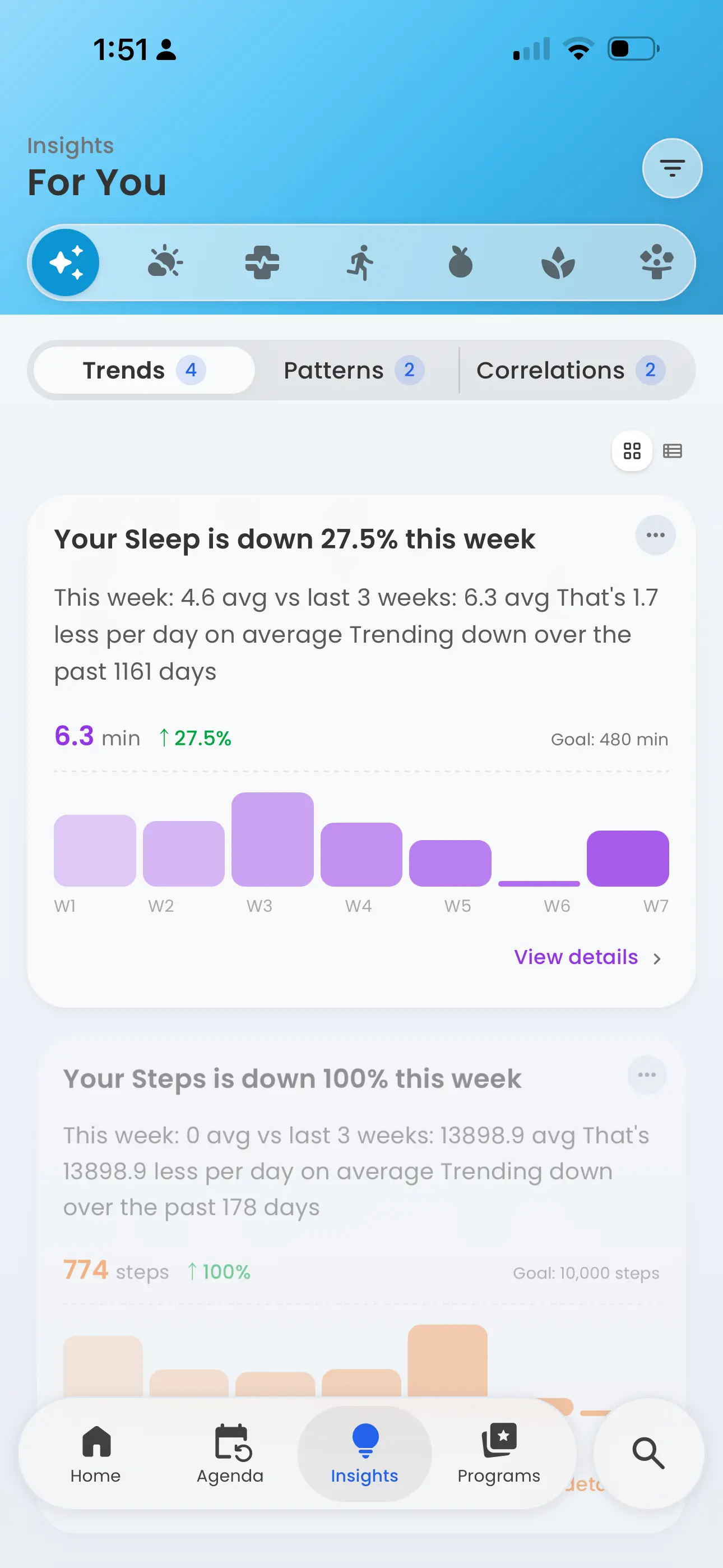
The first pattern. Small. Worth paying attention to.
She started with six things. That was enough.
Amara logged five of seven days. She didn't backfill. She didn't start over. She kept going. That's what consistency actually looks like — not perfection, just persistence.
Not the week. The way she moved through it.
The app didn't change Amara's week. The same things happened. The same meetings, the same lunch she skipped, the same tired Friday afternoon. What changed was that she had a place to put the observations she'd been making anyway — half-consciously, in the background — and a way to look back at them all at once.
She'd known, vaguely, that skipping lunch made things worse. She knew poor sleep affected her. These aren't new ideas. What she didn't have before was the specific version of that knowledge that belongs to her — on her schedule, in her body, in her week. That specificity is what makes it actually useful.
One week isn't enough to be sure of anything. But the hypotheses you form in week one are the ones you test in week three — and that feedback loop is the whole point. She keeps logging.